For years, digital communications have been dominated by owned media leading to heavy investment in websites, social channels, and SEO strategies designed to attract audiences directly. The logic was simple: create content, optimise it for discovery and drive traffic back to owned platforms.
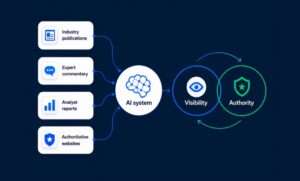
But as AI begins to reshape how information is discovered and consumed, a new dynamic is emerging. In an environment where content is abundant and AI systems are responsible for interpreting and summarising information; independent validation is becoming increasingly valuable and there is a renewed importance for earned media.
The Challenge of Infinite Content
The internet has never contained more content than it does today as brands publish an abundance of articles, videos, reports, announcements, and commentary designed to demonstrate expertise and influence perception. Generative AI is accelerating that trend further, making it easier than ever to create content at scale.
This presents a new challenge for audiences; when information is so easily accessible everywhere, how do you determine what is trustworthy? The same challenge exists for AI systems that must identify signals that help distinguish authority from opinion, evidence from promotion, and expertise from noise.
This is where earned media becomes increasingly important.

Why Third-Party Validation Matters
A company can describe itself as innovative, or as a market leader and publish detailed content explaining the value of its products and services. However, when independent journalists, industry analysts, respected trade publications, and subject matter experts support those same claims, they take on a different level of credibility.
Third-party validation has always been the gold standard in communications but now it carries even further wait in its role within digital discovery. When trusted external sources consistently associate a brand with a particular capability, technology or market position, those associations become stronger and more durable over time.
The Return of Earned Authority
Digital marketing conversations have focused heavily on owned channels with perceived success measured through traffic, rankings, engagement, and conversion. While these metrics remain important, they do not tell the whole story in an AI-driven information environment – brands now need to consider how they are represented beyond their own channels. To understand this level of representation is to understand how a brand is perceived in the wider information ecosystem, one that increasingly shapes how information is surfaced, interpreted, and trusted.
From Campaigns to Consistency
One of the most significant implications for communications leaders is the need to think beyond individual campaigns and consider cumulative evidence. A major product launch may generate substantial earned media coverage for a brief period, but sustained authority is typically built through consistent presence over time.
Regular commentary, expert insight, measurable proof points, and ongoing participation in industry conversations create a body of evidence that compounds. This is particularly important in complex industries such as automotive, aerospace, defence and advanced technology, where buyers, analysts and stakeholders often rely on multiple sources before forming opinions.
Supporting the Information Ecosystem
As earned media becomes increasingly important, brands are also re-evaluating how they support the people who create and share information. Journalists, analysts, and content creators work under intense time pressure. Access to accurate information, supporting assets and knowledgeable spokespeople can significantly influence the quality and consistency of coverage.
For this reason, many communications teams are investing in newsroom environments that make trusted information easier to access and use. A well-structured newsroom does more than distribute announcements. It acts as a central source of truth, helping external audiences find verified information, supporting materials and expert perspectives when they need them. The easier it is for credible third parties to engage with a brand’s story, the easier it becomes for that story to be understood, shared, and reinforced.
Measuring What Matters
The growing importance of earned media is also changing how success is measured – while traditional metrics such as media volume and reach still have value, but they reveal only part of the picture.
Communications leaders increasingly need to understand deeper questions:
- Which themes is our brand most strongly associated with?
- Are our proof points being repeated across trusted sources?
- Where is competitor narrative momentum increasing?
- Which topics are we leading, and which are we losing?
Understanding the quality, consistency and influence of coverage provides a clearer view of whether a brand is building the type of authority that compounds over time.
Earned Media's New Strategic Role
The rise of AI is not reducing the importance of communication; it is increasing it. In a world where content is limitless and accessible at our fingertips, credibility becomes scarce. Earned media provides something that owned content alone cannot: independent validation. That validation strengthens reputation, reinforces authority, and helps brands build a more resilient presence within the wider information ecosystem.
The brands that succeed in the years ahead will not be the most frequent publishers of content but those that direct focus on earning trust, supporting credible storytelling, and consistently reinforcing the narratives that matter most. Because in an age of AI, authority is no longer defined by what brands say about themselves – it is shaped by what others say about them.
Want to build authority through a newsroom designed for journalists and trusted sources? Click below to talk to us about a bespoke newsroom.