For more than two decades, digital visibility has largely been a game of rankings. Brands have invested heavily in SEO, content marketing, and backlink strategies to improve their position on search engine results pages. Success was measured by how often users clicked through to owned content from a list of links, but that model is changing rapidly.
AI-powered search is fundamentally altering how information is discovered and consumed. Instead of presenting users with a page of links to explore, AI increasingly provides a single synthesized answer and the implications for communications leaders are significant.
In a world where AI generates the answer, visibility is no longer about being one of ten results. It’s about being one of the few sources AI chooses to include.
The Shift from Ranking to Selection
Traditional search rewarded discoverability. If your content ranked well, users could find it, but AI search operates differently. When a user asks, “Which automotive manufacturers are leading autonomous driving systems?” or “Which companies are innovating in battery technology?”, AI systems don’t simply return a list of websites. They analyze multiple sources, identify common themes, and generate a consolidated response.
What determines which brands appear in that answer?
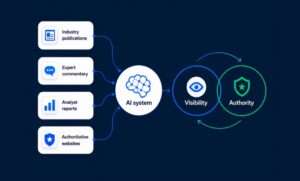
A growing body of evidence suggests that AI systems consistently favour signals associated with credibility, authority, and consensus.
These signals include:
- Independent validation from third-party sources
- Consistent mentions across reputable publications
- Expert commentary and attribution
- Verifiable performance claims
- Strong association between a brand and a specific topic

The Rise of Credibility Optimization
A new discipline is emerging: credibility optimization. This isn’t to suggest the abandonment of SEO but instead recognizing that AI-generated discovery places greater emphasis on signals that indicate trustworthiness and authority.
When AI systems evaluate which sources to trust and reference, externally validated information often carries greater weight than self-published claims. Earned coverage doesn’t just create awareness, it creates evidence. Every credible third-party mention helps reinforce a narrative about who a company is, what it stands for, and why it matters.
The Compression of Visibility
Perhaps the most important consequence of AI search is the compression of visibility. In traditional search, users could explore multiple pages of results. Brands had numerous opportunities to be discovered, even if they weren’t ranked first. AI fundamentally changes that dynamic, as when the user receives a synthesized answer, only a handful of brands are typically referenced, and the result is a dramatically narrower field of visibility.
Brands included in AI-generated responses can benefit from increased authority and exposure. Brands excluded from those responses may become effectively invisible for that query. As AI-generated answers become more prevalent, the gap between inclusion and exclusion is likely to widen.
Why This Matters for Communications Leaders
For communications professionals, this shift represents more than a technological change, it changes how reputation influences discoverability.
Historically, PR teams focused on building awareness, shaping perception, and supporting business objectives through media engagement. While these objectives remain important, AI search introduces a new layer to consider: influencing the information ecosystem that AI systems use to generate answers. Coverage in respected publications, expert thought leadership, measurable proof points, and consistent narrative positioning are no longer just reputation-building activities but discoverability assets.
The Newsroom's New Role
As AI-driven discovery places greater emphasis on credibility and authority, the quality of information readily available to journalists becomes increasingly important.
A modern newsroom does more than host press releases. It serves as a structured source of truth for media, analysts and other stakeholders, making it easier to access verified information, supporting assets and expert perspectives.
The easier it is for credible third parties to understand, validate and report on a brand’s story, the stronger the signals that brand creates across the wider information ecosystem.
A New Opportunity for Earned Media
For years, discussions about digital visibility have often centred on search optimization but AI search is creating a renewed appreciation for earned media as the systems seek ways to determine which claims are credible. In a digital environment flooded with content, trust becomes a scarce resource.
The organizations that build credible, consistent narratives across trusted media outlets are not simply improving their reputation. They are increasing the likelihood that AI systems will recognise and reinforce their authority.
The Future of Visibility
AI search is still evolving, but one trend is becoming increasingly clear: visibility is no longer determined solely by what brands publish about themselves, it is increasingly influenced by what trusted sources say about them.
The brands that succeed in the next era of search will not simply produce more content. They will focus on building stronger credibility signals through authoritative coverage, measurable proof points, and consistent market positioning.
For communications leaders, that means investing not only in the stories they tell, but in the systems that help those stories travel further. Earned media programmes, robust newsroom infrastructure, and effective media intelligence are increasingly becoming strategic assets in a world where credibility drives discoverability.
Because in an AI-driven world, visibility is no longer about ranking, it’s about being selected.
Want to make your brand easier for journalists, stakeholders and AI search to find? Talk to us about building a smarter newsroom.